
E-POWER with ❤️
We get your transports on the road with heavy-duty e-trucks - from regional plant and shuttle transports to solutions that can be linked to rail and RAIL-HUB if required.
Heavy-duty e-trucks in use: E-Actros & Volvo FH Electric up to 44 t total weight
Plannable changeover: gradual electrification of existing routes
Optional with RAIL-HUB: Can be combined with siding and energy infrastructure if required
Why e-truck transportation with DENKINGER?
For us, electric trucks are not a show project, but an integral part of our day-to-day transport operations. We use heavy-duty electric trucks where they already work reliably today – especially in clearly plannable plant, shuttle and regional transportation.
We pay attention to three things:
Practice instead of theory: We electrify routes that run stably in day-to-day business – without experimenting on your back.
Economical solutions: We plan rotations, idle times and loading processes so that they fit into your processes and cost structures.
Perspective: If it makes sense, we can later combine e-trucks with other components such as rail or RAIL-HUB – but we don’t have to.
Our e-truck fleet at a glance
Fleet today
Several fully electric trucks in use, including Mercedes-Benz eActros and Volvo FH Electric
Suitable for semi-trailer and solo vehicles
Approved for transports up to 44 t (combined transport)
Application profiles
Regional shuttle services in the Ulm/Ehingen area
Connections to our Rottenacker rail hub
Transport between plants and storage locations
Performance data
Practical ranges of several hundred kilometers – depending on weight, topography and application profile
Plannable charging stops at our own fast-charging stations
High continuous output for heavy-duty applications
Perspective
Fleet to be expanded step by step
Focus on routes on which e-trucks already function reliably today
Close cooperation with vehicle manufacturers and energy partners
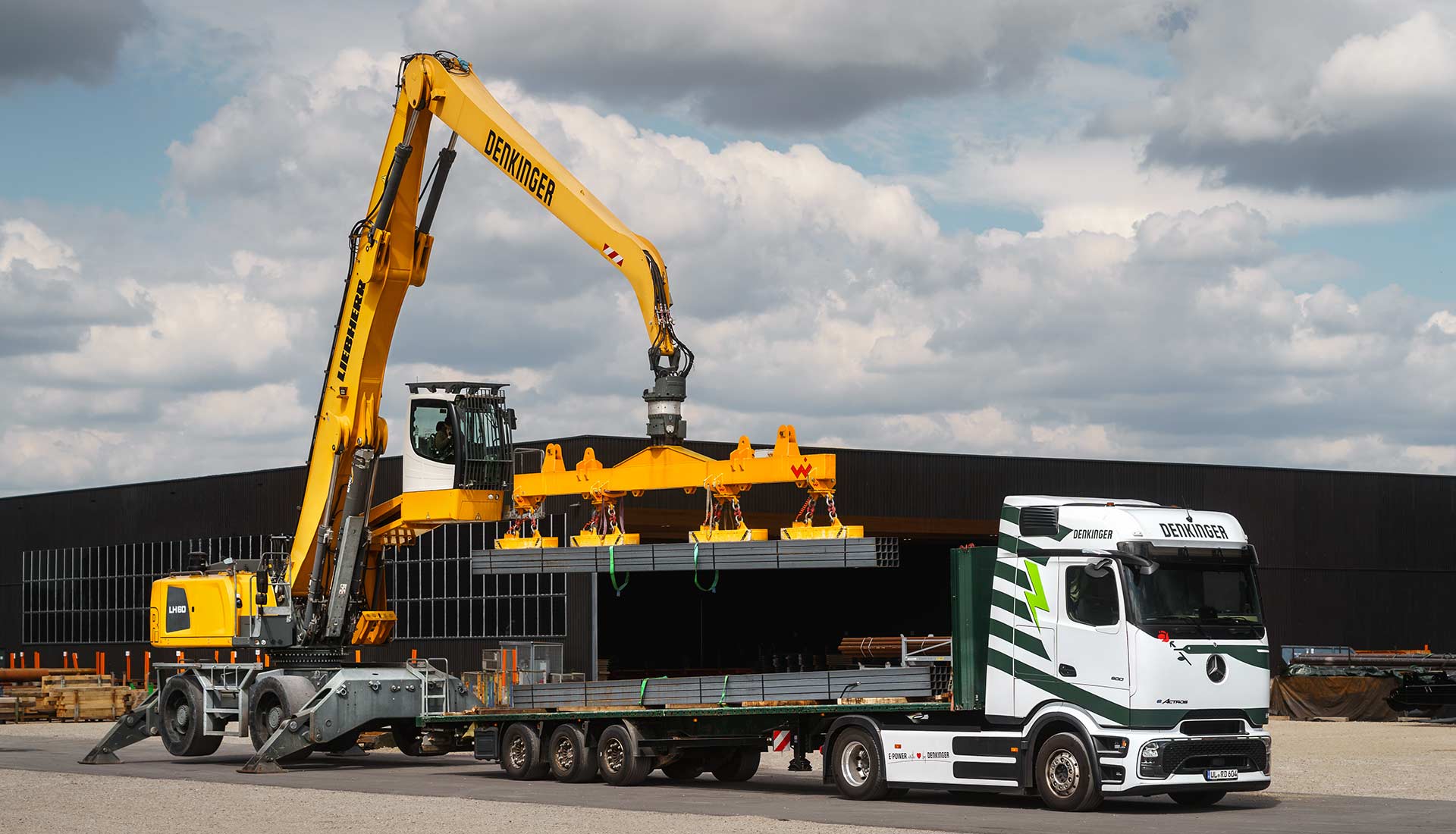
Typical areas of application for our e-truck transportation
We use e-trucks where they already work safely today - and deliver real added value for your transport chain.
RAIL-HUB-Shuttle & rail lead
Regular shuttle services between RAIL-HUB, plants and warehouse locations are ideal for the use of e-trucks. Fixed routes, predictable downtimes and recurring tours make this possible:
stable circulation planning,
reliable charging window,
a calculable CO₂ footprint per tour.
Heavy-duty and steel logistics with electric trucks
In steel logistics and heavy-duty transportation, the interplay of load capacity, safety and energy efficiency plays a special role. Our e-trucks can be used in selected heavy-duty scenarios – above all:
- on clearly defined trunk routes,
- with transshipment at locations where charging infrastructure is available,
- in combination with our special solutions in heavy-duty logistics.
Plant transports & shuttles between locations
E-trucks are particularly suitable for recurring transportation between own plants, suppliers and warehouse locations. Typical scenarios:
- Daily shuttle connections between production site and warehouse,
- Fixed tours with plannable time slots,
- Integration into existing time slots and ramp assignment.
Regional transportation in the Ulm/Ehingen area
On regional routes in the vicinity of our locations, e-trucks can be economically and ecologically convincing. Here you benefit from:
- short distances with clear return points,
- Charging options at our own locations
- a direct contribution to reducing emissions in your region.
Why e-truck transportation is an advantage for the food industry in particular
Food logistics is under constant pressure: tight delivery windows, sensitive goods, strict regulations in city centers and residential areas. This is precisely where e-trucks play to their strengths – especially in the region and in the store network.
Quiet night deliveries in residential areas
With e-trucks, markets, bakeries or beverage retailers can be supplied at night or early in the morning without disturbing the neighborhood with engine and start-up noises. This allows delivery windows to be shifted to off-peak times – the goods are on the shelves in good time before opening, without any trouble from residents or authorities.
Better access to city centers and sensitive zones
City centers and municipalities are increasingly focusing on environmental zones, noise protection and stricter rules for delivery traffic. E-trucks are a strong argument here: quiet, locally emission-free on the road and therefore much more future-proof than traditional diesel transportation.
Clean delivery at the ramp and market
The overall impression counts, especially when it comes to fresh food. E-trucks do not emit any exhaust fumes locally – neither at the loading ramp nor in front of the store entrance. This improves the working environment for employees and suits brands that want to make a credible sustainability promise to their customers.
Efficient combination of cooling, route and energy
In food logistics, refrigeration, time pressure and energy consumption are directly related. In conjunction with sophisticated energy management, e-trucks can be planned so that loading times, routes and refrigeration requirements interact optimally – from the ramp to the store.
Strong signal for brand and end customers
Many consumers today expect food brands to take visible steps towards sustainability. Those who have their stores supplied by e-trucks not only demonstrate this in their sustainability report, but also on the road – every day.
Optional: E-truck, rail and RAIL-HUB combined
Not every e-truck transport needs rail or RAIL-HUB. However, if your transport chain is suitable, we can combine e-trucks with other modules.
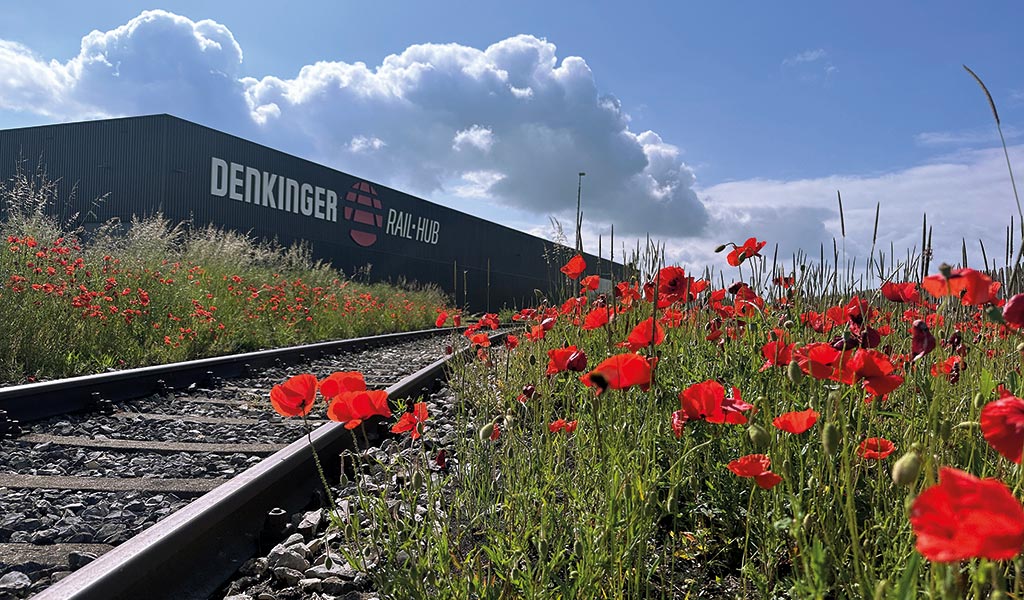
RAIL-HUB as an option
Own rail connection with links to national and international connections
Storage space and transshipment facilities directly on the railroad
Short distances between rail, warehouse and road
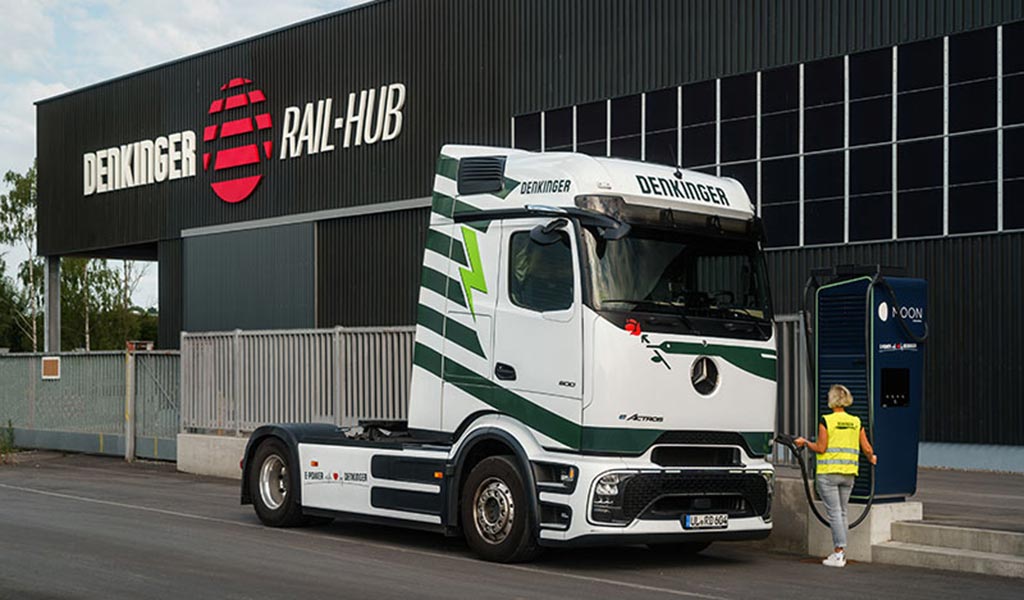
Energy & charging infrastructure
- Fast charger with high power for short charging times
- Power supply with a high proportion from own photovoltaics
- Planned charging strategies for recurring tours
YOUR ADVANTAGES
Less diesel, more electricity
Shifting emissions from the tailpipe to more predictable energy chains
Better CO₂ balance per tonne
Combination of rail and e-truck optimizes the footprint of your transports
Plannable rotations
Defined loading windows, integration into your time windows and ramp planning
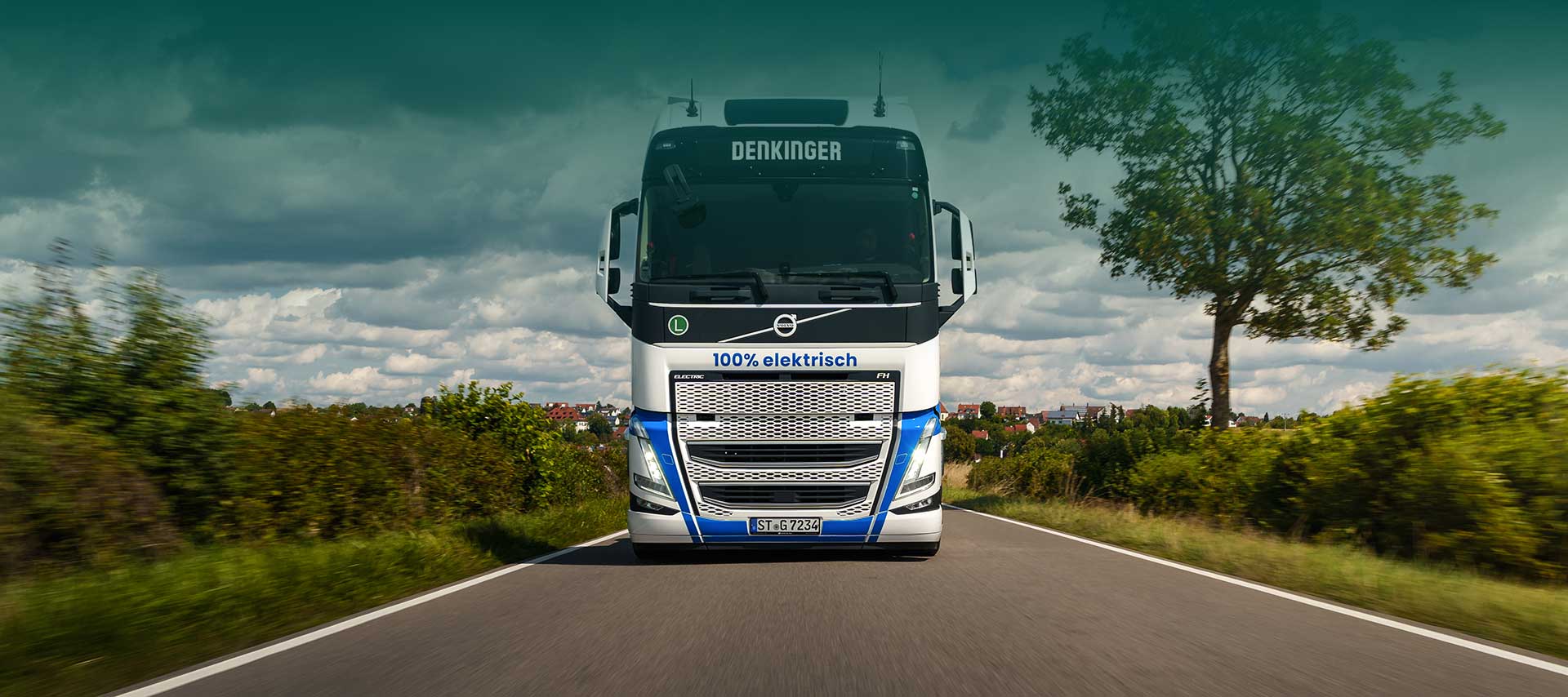
This is how we start e-truck transportation together
We take you with us - with a clear roadmap.
Step 1 - Route and potential analysis
We check together with you:
- which routes are suitable for e-trucks,
- which weights, frequencies and time windows are available,
- where existing locations, rail connections and storage areas can be used.
Step 2 - Plan e-circulation & infrastructure
We plan on the basis of this analysis:
- which routes are suitable for e-trucks,
- which weights, frequencies and time windows are available,
- where existing locations, rail connections and storage areas can be used.
Step 3 - Pilot & scaling
We deliberately start with a manageable pilot:
- which routes are suitable for e-trucks,
- which weights, frequencies and time windows are available,
- where existing locations, rail connections and storage areas can be used.
Have e-truck transportation checked
Let us know your routes – we will get back to you with an assessment of whether and how e-trucks can be used in your company.