
Sustainable logistics
Sustainable logistics
Innovation and environmental protection go hand in hand
We are committed to treating our environment with care. That’s why we pay close attention to how we organize transport and processes. We regularly check where we can reduce emissions and save energy. Every step we take should contribute to protecting our environment. This way of thinking is reflected in everything we do – from daily transportation to planning new solutions.
DENKINGER Eco-Values
Neutral TRANSPORT
CO2 compensation
Every transport leaves traces – we compensate for them. That’s why we precisely record the CO₂ emissions of every journey. With our tree certificates, we ensure that new trees are planted. Each tree grows into a living symbol of responsibility and absorbs around 22 kg of CO₂ every year. In this way, every transport is not just a journey from A to B, but also a contribution to a greener future.
Fuel alternatives
HVO diesel & hydrogen
HVO diesel is a synthetic fuel obtained from waste and residual materials such as vegetable oil, animal fat or used cooking oil. It is fully compatible with modern Euro 6 engines and can be used directly in your truck without any technical modifications.
E-TRUCK TRANSPORTATION
The fleet goes green
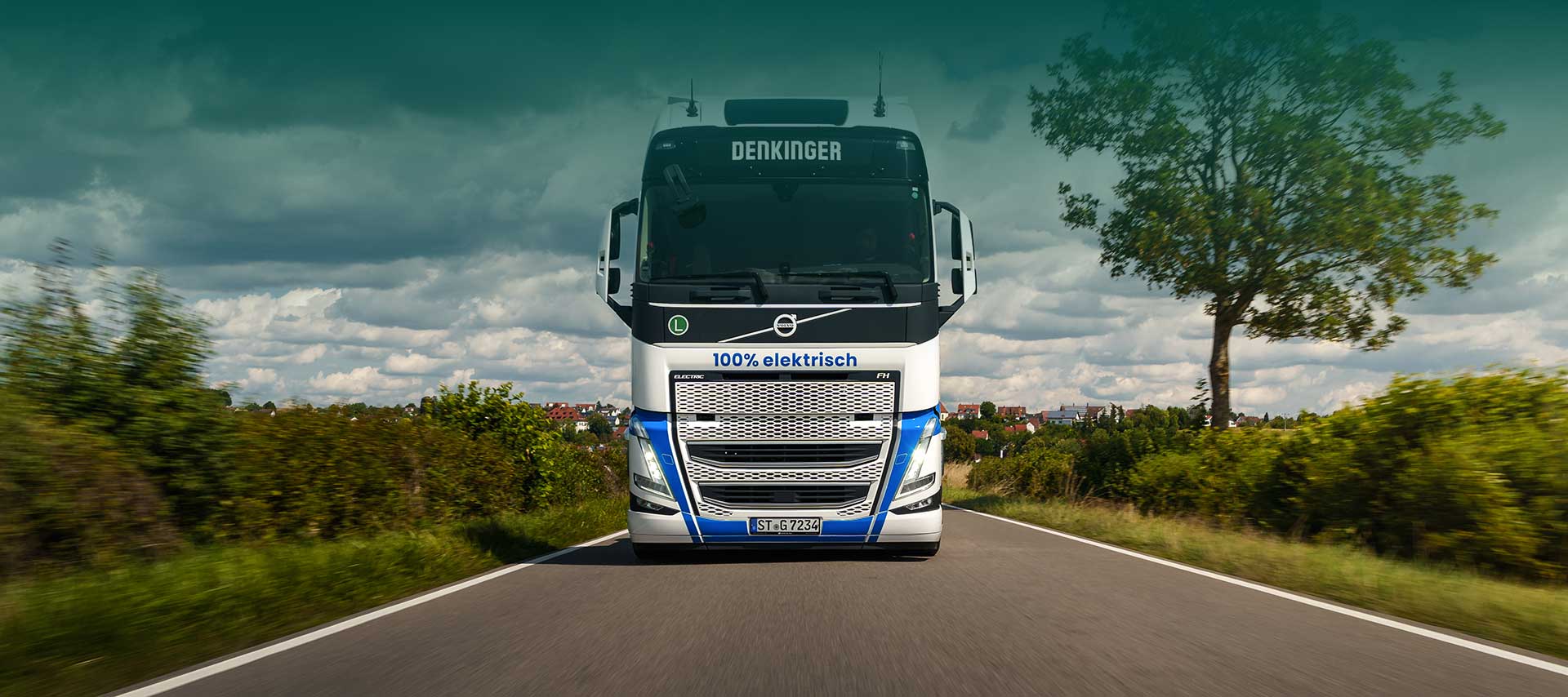
Our fleet includes several Volvo FH and eActros with electric drive. They have a range of up to 500 kilometers. The batteries have 600 kWh and the motors deliver 400 kW – that’s around 544 hp. So we drive powerfully, quietly and without exhaust fumes.
RAIL TRANSPORT
Five sidings
DENKINGER prefers to build sites where there are rail connections – or we create them ourselves. This makes transportation easier and noticeably reduces the burden on the environment.
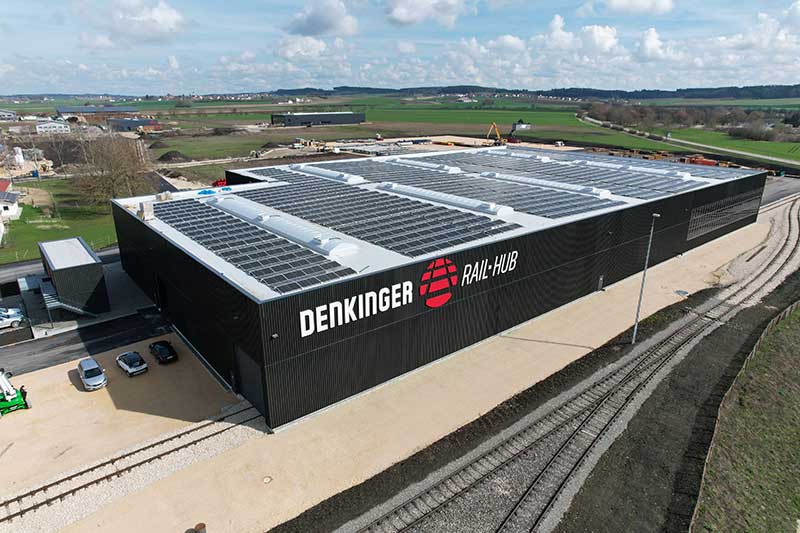
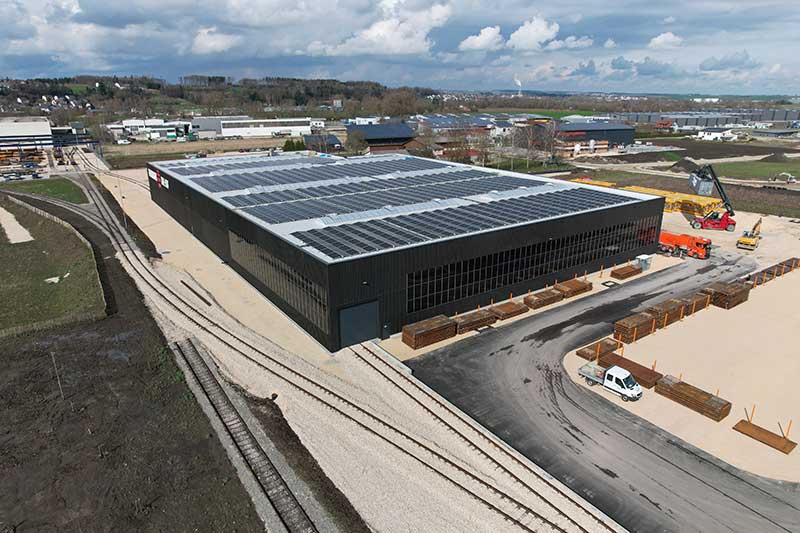
A good example is our site in Rottenacker. In 2023, we will have the DENKINGER RAIL-HUB with two modern transhipment halls. Entire trains can enter directly and be unloaded using the latest technology. Onward transportation in the region is climate-friendly with our e-trucks.
ECO CONSTRUCTION
Wood – Light – Water
We harness the power of the sun.
Our hall roofs and walls generate clean electricity. We use it to power our electric trucks and supply our sites.
We also use the rain.
Collected water irrigates our trees and saves valuable resources.
ECO-CALCULATION
Transportation mix & CO2
We work according to the latest international standards – including ISO 14083:2023 and the GLEC framework. This allows us to measure the CO₂ emissions of each individual transport precisely and traceably.
We also use specially developed analysis tools. They enable us to precisely calculate the ecological footprint of each transport – and to optimize it in a targeted manner.
THEY ALREADY KNEW …
… that one freight wagon can replace up to four trucks?
THIS SAVES A LOT OF CO2!
In 2023, our customers offset over 5000 tons.
On rail transport
Scroll up
THINGS ARE MOVING FORWARD: STEADILY GROWING E-TRUCK FLEET
We act before others react.
The demand for environmentally friendly transportation is growing. But we are not waiting, we are consciously leading the way. We are already developing logistics solutions that conserve resources and offer our partners real benefits – reliable, efficient and future-proof.
Our electric trucks show how change can happen.
They make an active contribution to climate protection with every journey. They stand for the transition to mobility without exhaust fumes and show that sustainability and performance go together perfectly.
Progress counts, especially on long journeys.
Electric drives and alternative solutions are the key to the energy transition in transportation. They help to significantly reduce CO₂ emissions in the long term – a benefit for the environment, the economy and future generations.
CO2-neutral transportation with tree certificates
How does it work?
What does this look like in practice?
How does it work?
We measureCO2 emissions for each of our transports. In order to compensate for this, we offer the possibility of neutralizing theCO2 emissions per transport through the additional purchase of tree certificates. This is because trees can store an average of 22 kgof CO2 per year. So if one or more trees are planted, theCO2 emitted is neutralized again.
What does this look like in practice?
In order to make our transportsCO2-neutral, we cooperate with a local organization that runs its own forest tree nursery and takes care of the preservation and reforestation of forest areas in Germany. With every purchase, a certificate is issued showing the number of trees planted and theCO2 saved. The certificates are also ISO-certified by TÜV Süd. On request, the GPS position of the planted trees can also be transmitted, thus ensuring the transparency of the planting. The certificate can also be issued directly to our customers on request and used for advertising purposes.
How can I as a customer make my transportationCO2 neutral?
Just get in touch with us! Together we will find the right solution and can jointly develop a sustainable transportation concept.
Alternative drive solution I
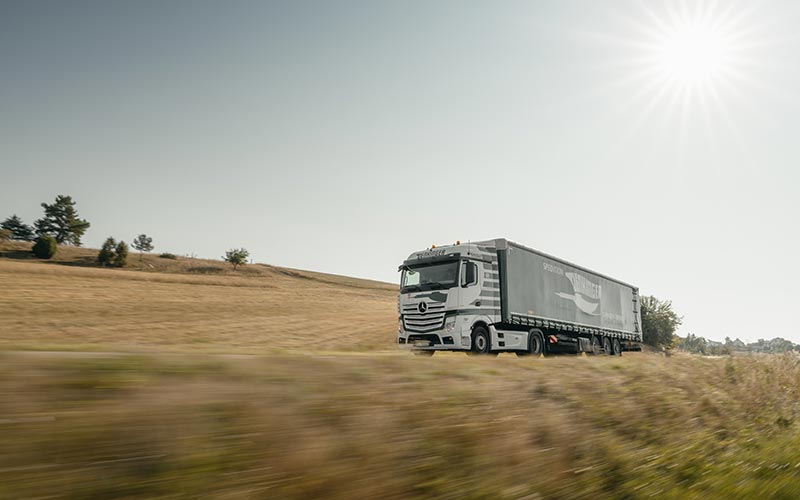
HVO diesel
HVO diesel is our clean alternative.
It is obtained from residual materials such as used vegetable oils, animal fats and cooking oil residues. This is how we combine waste recycling with climate protection.
The difference is huge.
Compared to conventional diesel, up to 90 % of greenhouse gases can be saved. Nitrogen oxides and particulate matter are also significantly reduced. This improves the air and protects the climate.
Simply use, immediately effective.
HVO diesel is suitable for all modern Euro 6 engines and can be refueled without any conversions. This makes it an economical solution for companies that want to combine efficiency and sustainability.
Alternative drive solution II
Hydrogen: It’s our turn – The H₂- Wandel project
We are part of “H2-WANDEL”.
DENKINGER is a partner in the “H2-WANDEL” project in the Alb-Donau district. The initiative is part of the EU’s “Hydrogen Valley” program. The aim is to create 100 regions worldwide by 2030 that will promote hydrogen as a new form of energy.
What does “Hydrogen Valley” mean?
A Hydrogen Valley is a center for clean energy. Unlike a traditional industrial area, the focus here is on the development of a sustainable hydrogen economy. Companies, research and infrastructure work hand in hand. Together, they develop solutions to produce, store, transport and use hydrogen in an environmentally friendly way.
Green hydrogen – clean and powerful.
The energy for this comes from wind and sun. This is how hydrogen is produced without any CO₂. The aim is to create an energy supply that protects our environment and curbs climate change in the long term.
Why we are taking part.
Because we believe in a future without emissions. With our participation, we are making an active contribution to shaping this change.
Would you like to talk to us personally? Please contact us!
DENKINGER’S REGIONAL ECO-CONSTRUCTION
Wood – Light – Water
When building new logistics locations, DENKINGER pays attention to the environment and the region. We rely on short distances, regional partners and materials. At the same time, we use modern technology that saves energy and reduces emissions. This results in locations that are efficient and at the same time protect our environment.
-
Wooden halls from regional forests
The halls of our new logistics locations are built with wood from regional forests. This reduces theCO2 footprint and supports the local economy at the same time.
-
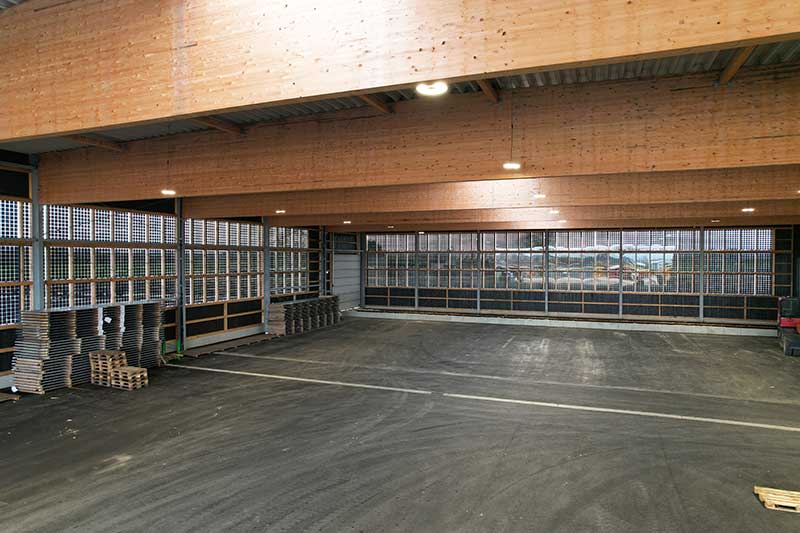
Denkinger relies on cold halls that do not require any additional heating energy. This minimizes energy consumption and protects the environment.
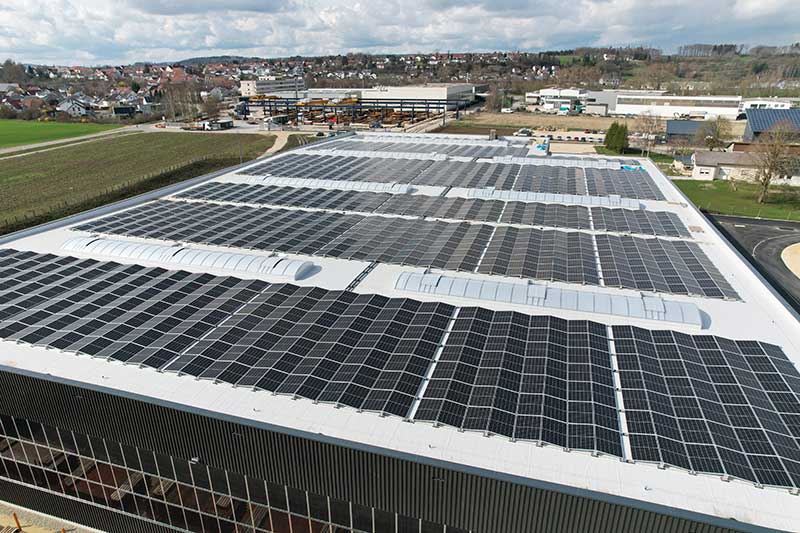
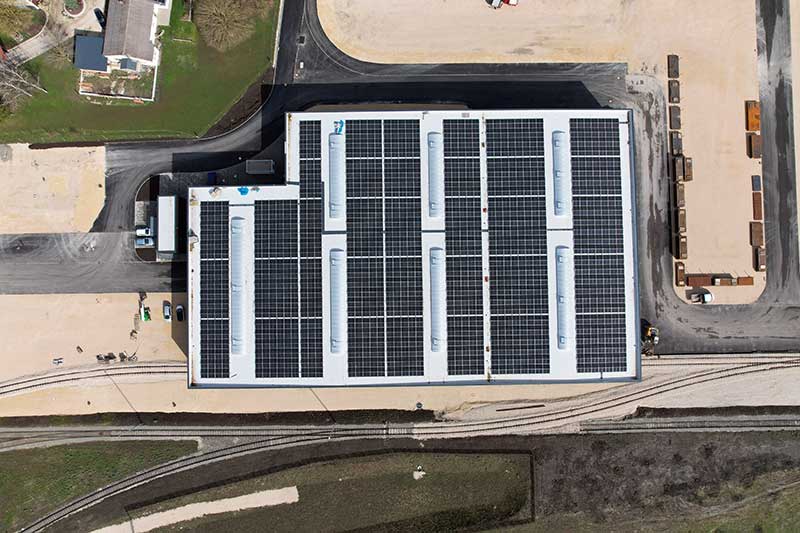
- The usable areas of the hall roofs are covered 100% with PV systems (60% are required).
- The electricity generated not only supplies the systems on site, but also the charging stations for e-trucks, e-cars and e-shunters as well as the electricity storage units.
-
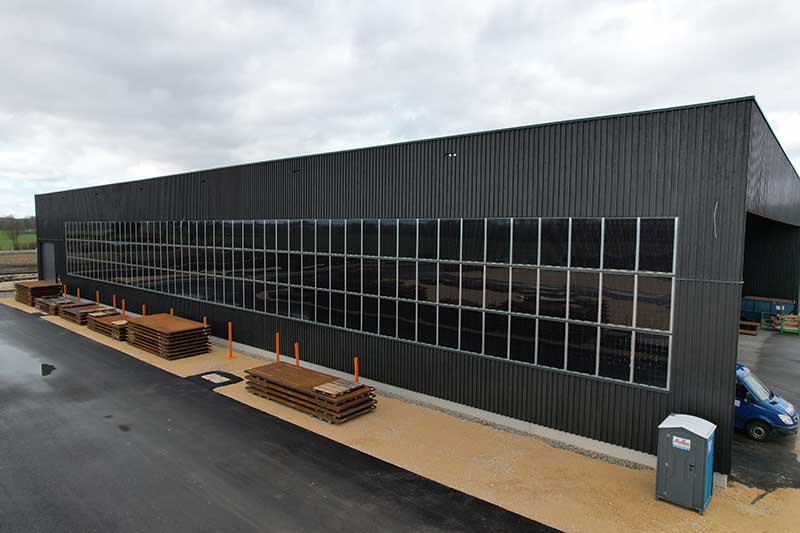
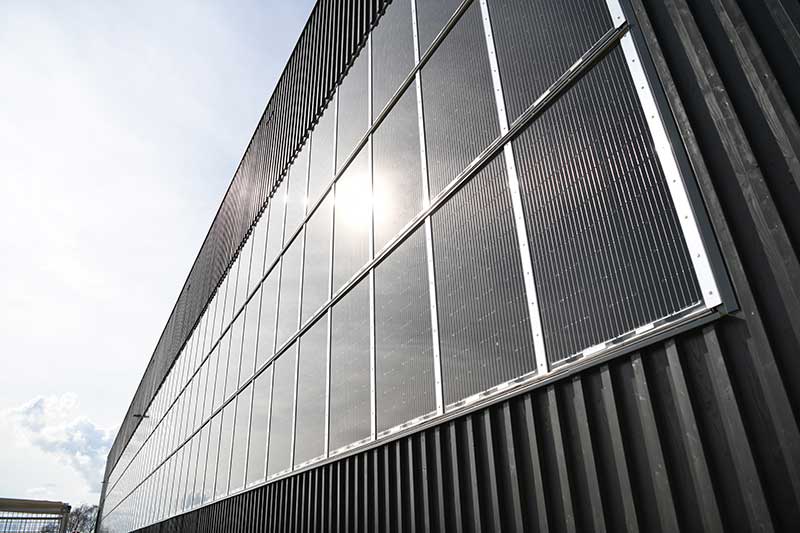
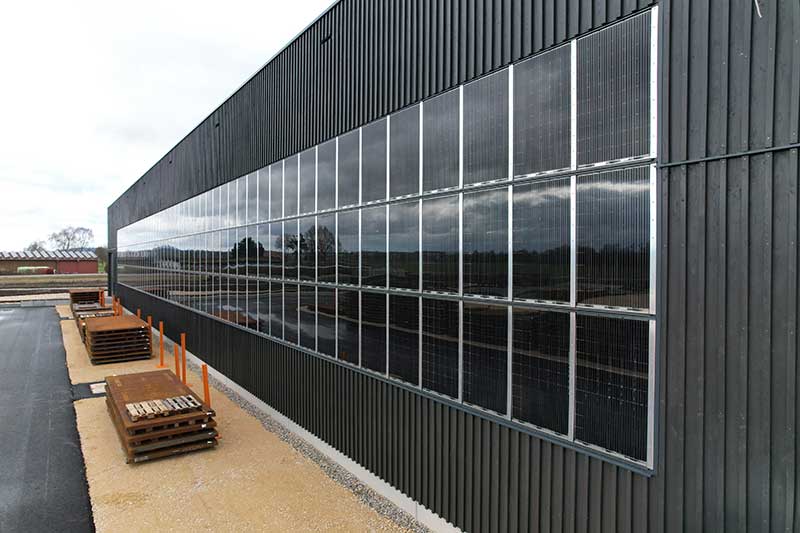
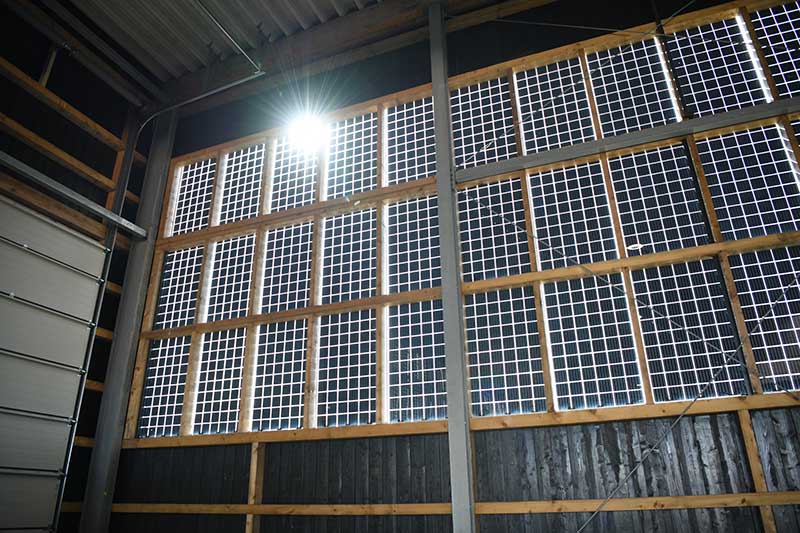
Natural daylight thanks to PV modules
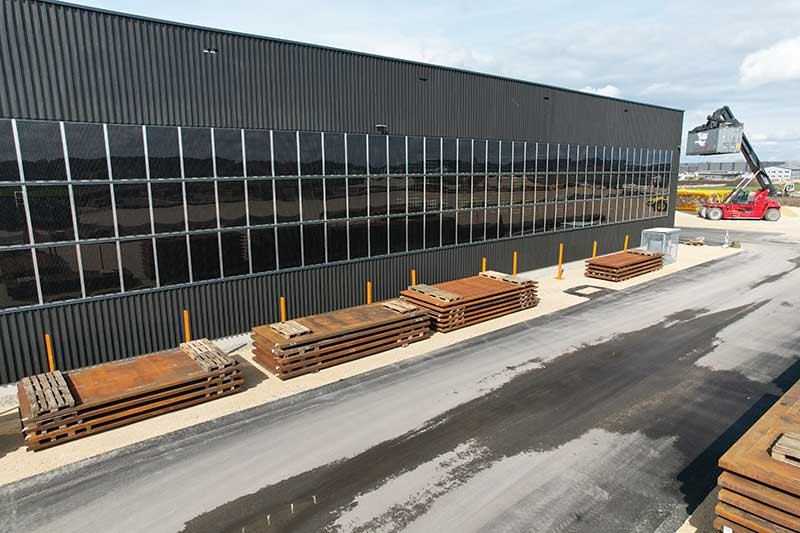
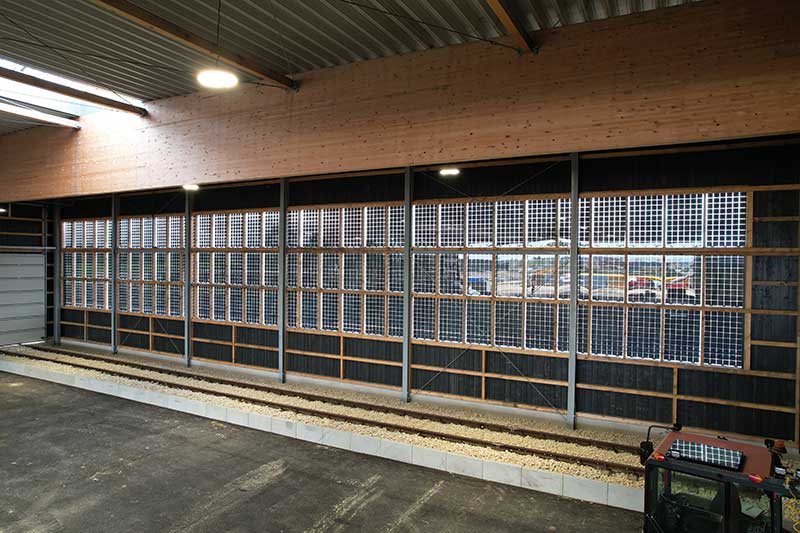
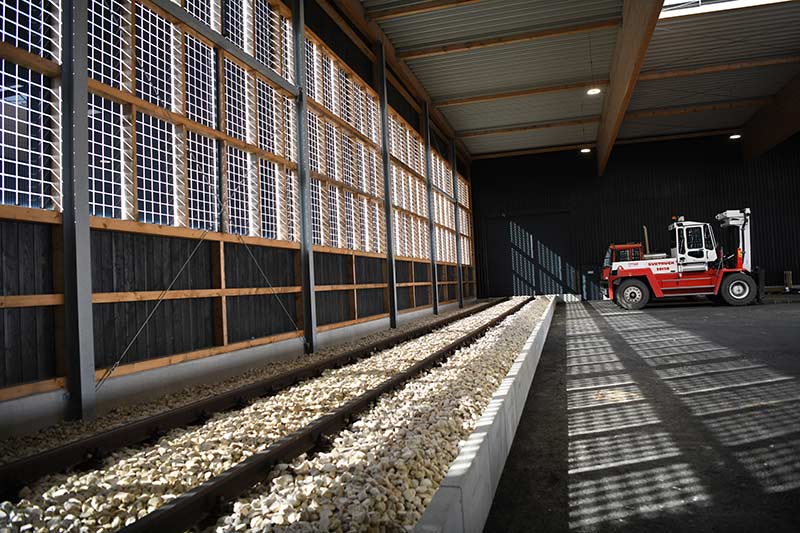
The side walls of our halls are partly made of solar modules. This not only provides us with additional electricity, but also soft daylight inside. -
Rail sidings for efficient transportation
Our sites are located directly next to rail tracks – or we build the sidings ourselves. This saves us many trips on the road and noticeably improves our environmental footprint. -
Rainwater harvesting for fruit trees
We collect rainwater in cisterns and use it to irrigate our fruit trees. This is about more than just efficiency: we want to preserve the landscape and create a lasting benefit for the region.
PRIME EXAMPLE RAIL-HUB ROTTENACKER
All DENKINGER EcoValues are combined here
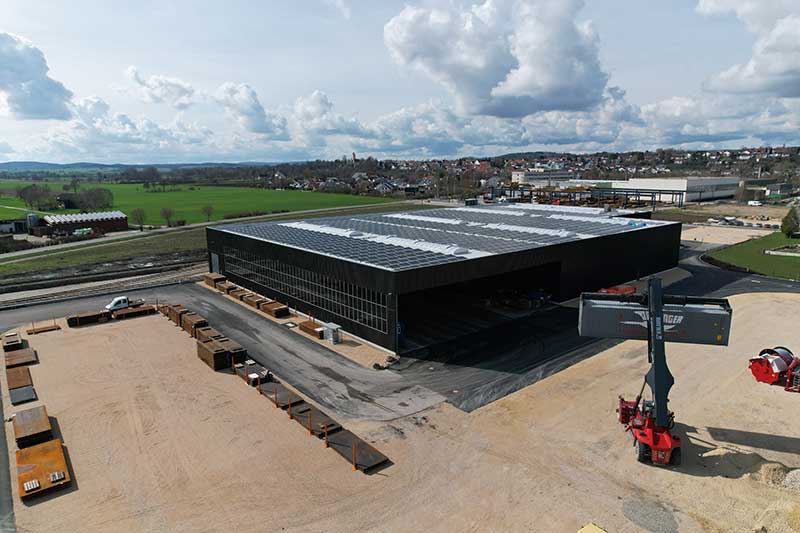
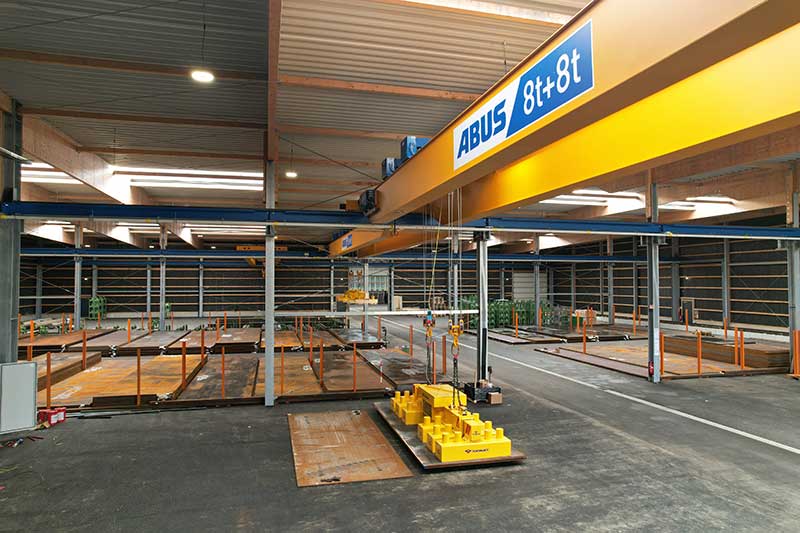
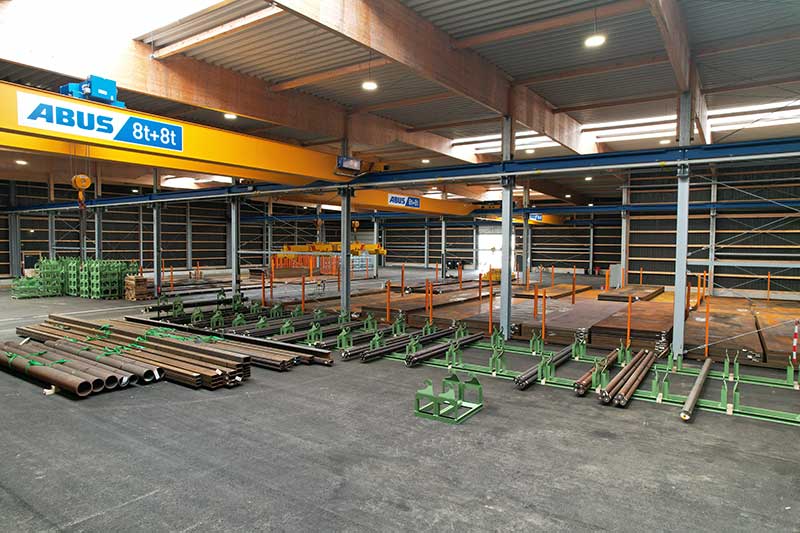
The DENKINGER RAIL-HUB meets all the environmental standards we set ourselves. The hall is made of regional larch wood. Solar panels on the roof and exterior walls generate clean electricity and let light into the interior.
Our own track system ensures efficient transportation of goods. We also collect rainwater to supply our trees and green areas. The result is a site that combines performance and sustainability.
Sustainable logistics: Responsibly into the future
We want to show that business and the environment go together. For us, sustainable logistics means: fewer pollutants, less consumption, more consideration for nature and people. This is how we create routes that are both strong and sustainable.
What does sustainable logistics mean?
It improves processes and structures along the entire supply chain. The goal: less CO₂, less noise, less waste. At the same time, it is about fair treatment of people and economic strength. This is how we combine the environment, society and the economy – three pillars that are equally important.
Why is sustainable logistics important?
Logistics shapes the climate.
Around 20% of CO₂ emissions in the EU are caused by transportation. In view of climate change, rising energy prices and society’s expectations, a rethink is essential.
Sustainability brings advantages.
Making your logistics more environmentally friendly saves costs through efficient processes, strengthens your reputation and increases employee satisfaction.
Measures for sustainable logistics
There are numerous approaches to making logistics processes more sustainable:
-
Use of alternative drive systems
Switching to electric, hydrogen or biogas vehicles significantly reduces emissions. -
Optimization of transport routes
Intelligent route planning and bundling of deliveries can avoid empty runs and reduce fuel consumption. -
Sustainable packaging
The use of reusable packaging and recyclable materials reduces waste and conserves resources. -
Energy-efficient warehousing
The use of LED lighting, heat recovery systems and photovoltaic systems reduces energy consumption in warehouses. -
Digitalization and automation
Modern IT systems enable supply chains to be managed more precisely and help to increase efficiency.
Challenges on the road to sustainable logistics
Despite the numerous advantages, companies face challenges when implementing sustainable logistics:
-
Investment costs
Switching to environmentally friendly technologies initially requires financial resources, but these can be amortized in the long term through savings. -
Complexity of supply chains
The integration of sustainable practices into globally ramified supply chains requires close cooperation with all partners. -
Regulatory requirements
Companies must continuously keep themselves informed about legal requirements and integrate them into their processes.
Your partner for sustainable logistics
As an experienced logistics company, we focus on sustainable solutions to minimize our ecological footprint and offer our customers environmentally friendly services. Our measures include:
-
Modern vehicle fleet
Use of vehicles with alternative drive systems to reduce emissions. -
Efficient use of energy
Use of solar power to supply our fleet of electric trucks -
Digital solutions: Implementation of IT systems to optimize supply chains and reduce empty runs.
Together with our partners, we are continuously working to make our processes more sustainable and contribute to environmental protection.