
WHEN FLEET CHANGES REQUIRE ADDITIONAL VEHICLE CAPACITY ...
... flexible open spaces provide the necessary leeway between return, reconditioning, and resale.
Fleet transitions often involve a lot of activity in a short period of time: vehicles are returned, new vehicles are delivered, and inventory must be checked, organized, and managed.
Especially during these transition phases, additional space helps streamline processes and avoids the need to move large numbers of vehicles under time pressure.
Denkinger supports fleet transitions with flexible open spaces, digital inventory transparency, and the right connections for the next step.
WHEN MANY VEHICLES START MOVING AT THE SAME TIME
- Spatially Separate Returned Vehicles and New Vehicles
- Systematically accept additional vehicle volumes
- Track inventory transparently and keep it accessible
- Flexibly prepare for onward transport and marketing
HOW FLEET CHANGES CAN BE MANAGED MORE SMOOTHLY
When fleets are replaced, two processes often occur simultaneously: vehicles are being returned, while new units are already being deployed or distributed.
Separate open areas help to physically separate these inventories and prevent the transition from unnecessarily disrupting existing site operations.
From an operational standpoint, a fleet replacement does not have to be decided at a single point in time. Additional vehicle capacity makes it possible to manage returned vehicles and new vehicles over a longer period.
This creates more flexibility between return, delivery, and further distribution—without everything converging simultaneously on your own premises.
Especially during major fleet transitions, factory premises, dealership locations, or central logistics facilities can quickly come under additional pressure.
External vehicle parking areas can help keep these locations clear and integrate the transition into the existing organization in a more controlled manner.
Not every vehicle follows the same path after a fleet change. Some vehicles are resold, while others are reconditioned, transported further, or integrated into new operational structures.
Flexible vehicle storage provides the buffer needed to avoid having to determine these next steps immediately, allowing inventory to be kept organized and readily available.
MORE FLEXIBILITY FOR PLANNED TRANSITION PERIODS
Fleet changes can usually be planned in advance—yet during implementation, there are often time windows when more vehicles need to be picked up, separated, and rerouted than anticipated during normal operations.
DENKINGER provides flexible open spaces for this purpose, where returned vehicles, new vehicles, or temporary inventory can be neatly stored and retrieved as needed.
Digital inventory transparency helps to clearly identify vehicles, ensure that status information remains traceable, and better prepare for follow-up processes.
Thanks to road and rail connections and the Bremerhaven location, vehicle fleets can also be flexibly integrated into existing transport and distribution processes.
ARE YOU PLANNING A FLEET UPGRADE THAT WILL REQUIRE ADDITIONAL SPACE?
If, during a fleet replacement, returned vehicles, new vehicles, or temporary inventory require additional capacity, it’s worth replacing them early.
PLANNING A FLEET CHANGE TOGETHER
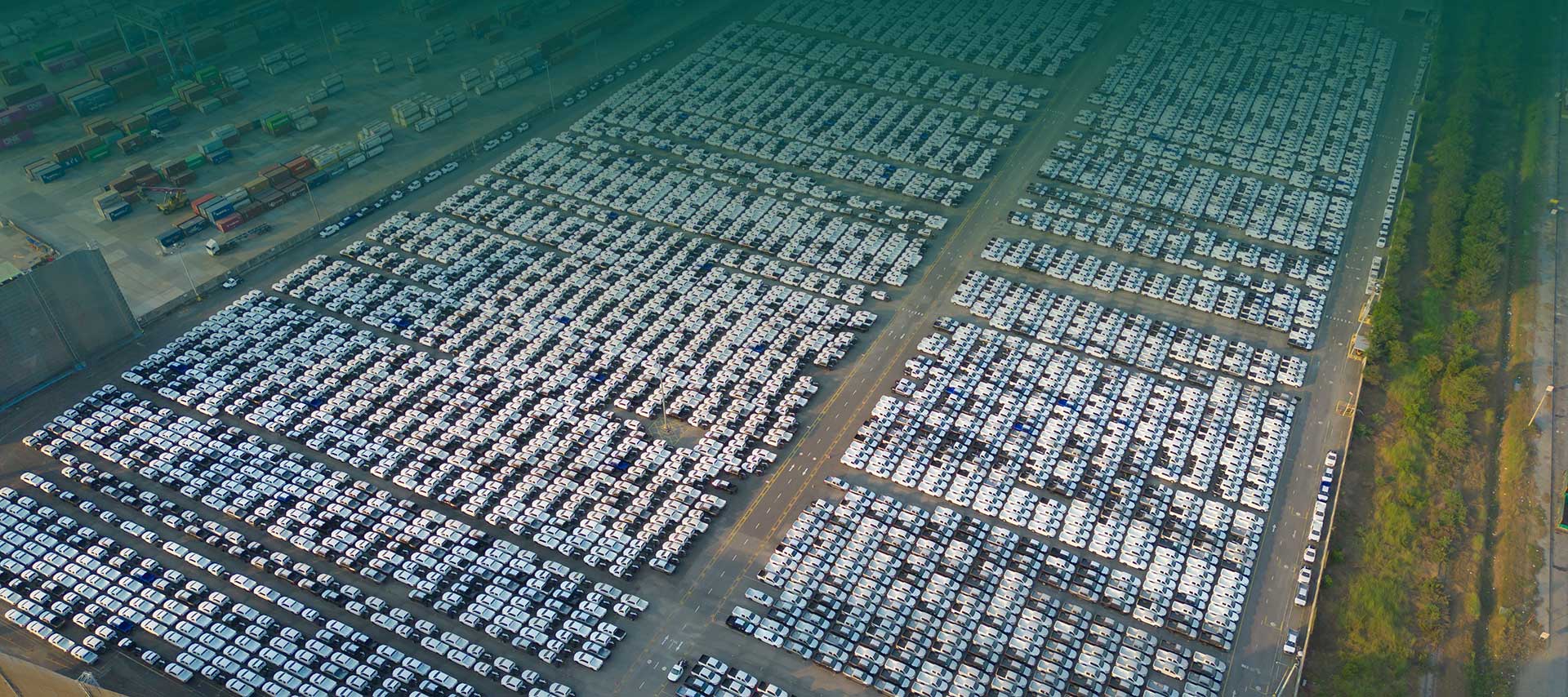
Car storage
Learn how open spaces, rail spurs, and the port connection via Bremerhaven can create additional opportunities.